
How Proper Farm Records Can Make Your Piggery Business More Profitable
 Many pig farmers work hard every day, but hard work alone does not always lead to strong profit. In many cases, the difference between a struggling farm and a growing one comes down to how well the farmer understands what is really happening on the business side of production. If you do not know which pigs are performing well, how much you are spending, where losses are coming from, or which areas need improvement, then profitability becomes difficult to control. This is why proper farm records matter so much.
Recordkeeping is sometimes seen as something extra, something to do only when there is time or when someone asks for a report. But on a pig farm, records are not just paperwork. They are one of the clearest tools you have for making better decisions. When your records are complete and organized, you can see what is helping the business and what is weakening it. That makes it easier for you to reduce waste, improve output, and manage the farm with more confidence.
Records help you see the real performance of your farm
Without records, it is very easy to judge the farm based on feeling rather than facts. You may think one group of pigs did well because they looked strong, or assume that breeding results were acceptable because many sows were served. You may believe feed costs are under control because you are buying regularly and production is continuing. But none of these impressions tells you clearly whether the farm is truly performing efficiently.
Proper records give structure to what would otherwise remain scattered in memory. They help you track breeding dates, farrowing outcomes, treatment history, mortality, feed use, growth performance, expenses, sales, and more. Once these details are recorded consistently, the farm becomes easier to evaluate. You no longer have to guess which animals are underperforming or whether certain routines are helping. You can review actual data and respond with more precision.
This is especially important in pig farming because small losses often build up quietly. A few missed heats, some weak growth, several avoidable deaths, or repeated feed waste may not seem dramatic day by day, but together they can seriously affect profitability. Records help you notice these patterns before they become too costly.
Breeding and farrowing records improve reproductive efficiency
Reproductive performance plays a major role in pig farm profitability, and good records make it easier to manage this area properly. When you record heat dates, breeding dates, pregnancy checks, expected farrowing dates, litter sizes, piglets born alive, stillbirths, and weaning outcomes, you create a clear picture of how well your breeding system is functioning.
These records help you identify which sows are performing well and which ones are repeatedly underperforming. They also allow you to track whether conception rates are improving, whether farrowing results are becoming more stable, and whether certain animals should be culled or replaced. Without this information, breeding decisions are often based on rough memory, which increases the chance of poor timing and repeated inefficiency.
Strong reproductive records also help you plan better. You can prepare for farrowing more accurately, organize labor more effectively, and estimate future pig numbers with greater confidence. This matters because better planning supports smoother production flow, and smoother production flow usually supports better profitability.
Health records reduce avoidable losses
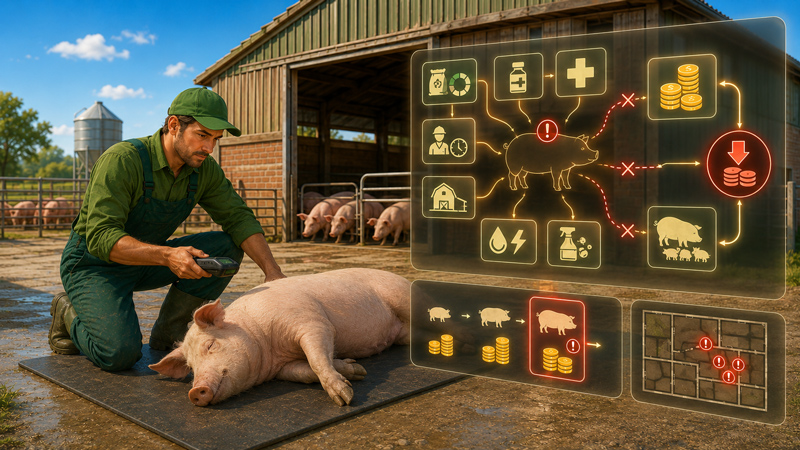
Health problems cost money in many ways. They reduce growth, increase treatment expenses, require more labor, and can lead to death if not managed properly. But when health issues are not recorded clearly, it becomes difficult to know whether a farm is dealing with isolated illness or a repeating pattern that needs deeper attention.
Proper health records allow you to track symptoms, diagnoses, treatments, recovery, vaccination history, and mortality. Over time, this information becomes very valuable. You may discover that a certain housing unit has repeated illness problems, that one batch is more affected than another, or that some treatment methods are giving better results than others. These insights help you act more effectively and reduce repeated losses.
Health records also improve continuity of care. If several people are working on the farm, everyone needs access to the same information. Without records, important treatment details can be forgotten or misunderstood. With records, care becomes more consistent and the risk of repeated mistakes becomes lower.
A more profitable piggery business is usually one that controls health problems quickly and learns from them properly. Records are a big part of making that possible.
Growth and feed records show whether pigs are truly performing
Feed is one of the biggest costs in pig farming, which means you need to know whether that investment is producing the right result. If pigs are consuming feed but growing slowly, there is a problem somewhere that must be understood. If some groups are performing better than others, you need to know why. That is where growth and feed records become especially useful.
When you track weights, growth stages, feed use, and feed efficiency, you begin to see how well pigs are converting resources into productive value. You can compare pens, batches, or age groups and identify where performance is weaker than expected. This helps you spot problems such as poor nutrition, overcrowding, water issues, disease pressure, or management inconsistency.
Good feed and growth records also support better financial judgment. You are able to estimate how much feed is going into a group of pigs and whether the returns justify the cost. That makes it easier to adjust your feeding program, control waste, and improve production efficiency over time.
Expense and sales records make profit easier to measure
One of the simplest reasons proper records improve profitability is that they help you understand your money more clearly. Many farmers know they are spending on feed, treatment, repairs, labor, and transport, but unless those costs are recorded properly, it is hard to know where the biggest pressure on profit is coming from. The same is true for sales. Money may come in from pigs sold, but without accurate records, you may not know whether the sale actually delivered a strong margin.
Expense records allow you to review where the farm’s money is going. You can compare months, track rising costs, and identify where spending may be too high for the level of production you are getting. Sales records help you understand how much income is being generated from different production cycles and whether pricing decisions are supporting the business properly.
Once you combine expense and sales records, profit becomes easier to assess in a realistic way. You are no longer relying on a general sense that the farm is busy or cash is moving. You can begin to evaluate the business more accurately and make smarter choices about spending, pricing, and reinvestment.
Records help you make better decisions, not just store information
The true value of farm records is not that they exist, but that they help you decide what to do next. A good record system allows you to look back and learn from what has happened on the farm. It helps you identify repeat problems, compare results over time, and decide whether a new practice is helping or not.
For example, if you change feed suppliers, improve housing, introduce a new breeding routine, or begin treating pigs differently, records help you see whether those changes produced better results. Without records, you may only feel that things improved or worsened. With records, you can compare actual outcomes and decide more confidently whether the change was worthwhile.
That is why recordkeeping is so closely tied to profitability. Profit grows when your decisions improve. Your decisions improve when they are based on clear, usable information.
Digital recordkeeping makes farm management easier
As the farm grows, paper notes and memory often become harder to manage. Information gets scattered, details are forgotten, and comparison becomes difficult. Digital tools help solve this by keeping records organized, easier to update, and easier to review when decisions need to be made.
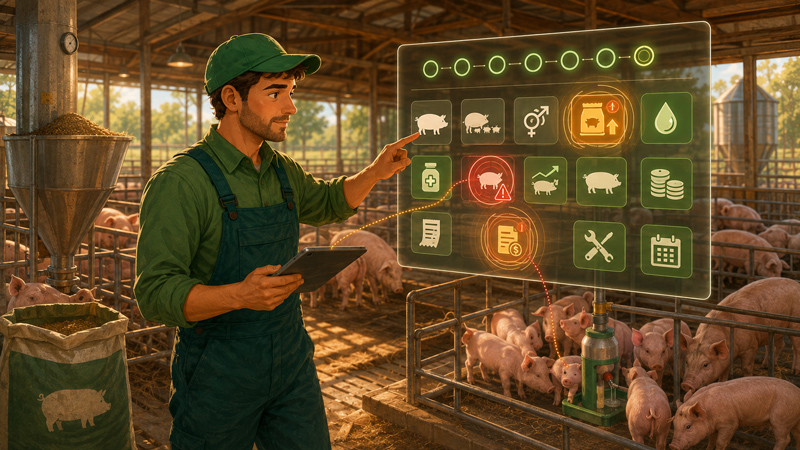
A digital system can help you store breeding records, farrowing outcomes, health treatments, mortality events, growth history, expenses, and sales in one place. This saves time, reduces confusion, and gives you a clearer overview of farm performance. It also makes it easier to spot patterns and generate useful reports without going through notebooks or loose papers.
For a piggery business that wants to grow profitably, this kind of structure is very valuable. It allows you to move from reactive management to more informed and controlled decision-making. Instead of depending on memory, you can build the business on consistent information.
Better records create a stronger business
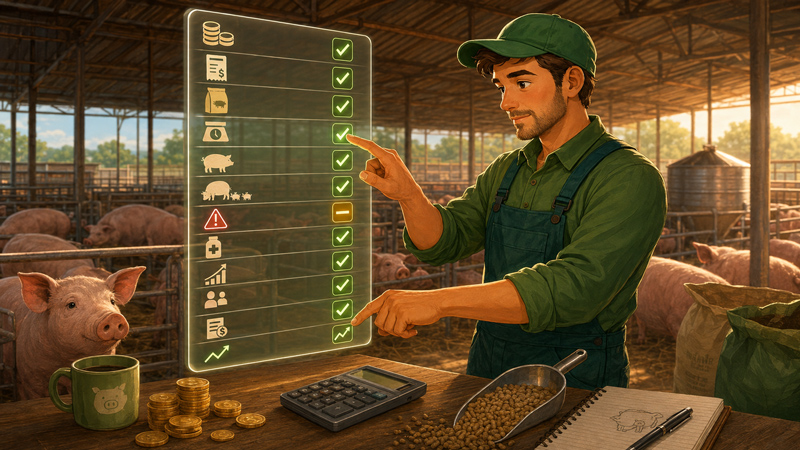
If you want your piggery business to become more profitable, proper recordkeeping is one of the most practical improvements you can make. It helps you understand production, control costs, reduce losses, monitor animal performance, and make decisions with greater confidence. It does not replace good farming skills, but it strengthens them by making your management more informed.
A profitable farm is usually not the one with the most activity. It is the one that understands its performance clearly and improves it consistently. When your records are complete and useful, you are in a far better position to protect profit and build a stronger pig farming business over time.